 |
Wet or Dry Pet Food - Is one better than the other?
The important criteria to consider in choosing the type of product are the place you shop, how much money you would like to spend and the level of convenience, palatability and digestibility desired. The difference in moisture content among the various types of pet food impacts the nutrient density of the products or the amount of nutrients per pound of food. As the water content of the diet increases, the amount of protein, fat and other essential nutrients decreases. That means the animal must consume a larger portion of the high moisture products to receive the nutrition they need, but it also makes comparisons between the different types of food difficult.
The main advantage of dry foods is convenience, as wastage is minimal, cost is low in comparison to canned or pouch foods, and it is claimed that the grinding action of eating dry food helps to keep teeth clean (again disputed by some.)
Recent research from a University of Missouri-Columbia veterinarian, Robert Backus, assistant professor and director of the Nestle Purina Endowed Small Animal Nutrition Program at MU compared a colony of cats in California raised on dry food with a colony of cats in New Zealand raised on canned food. After comparing glucose-tolerance tests, which measures blood samples and indicates how fast glucose is being cleared from the blood after eating, researchers found no significant difference between a dry food diet and a wet food diet. The causes of diabetes mellitus in cats remain unknown although there has been a strong debate about whether a dry food diet puts cats at greater risk for diabetes. This study suggested that weight gain, rather than the type of diet, is more important when trying to prevent diabetes in cats.
Canned or Pouch FoodObviously it is difficult to give anything other than a guide to the production process, as methods and machinery vary. Also, some products are presented in a 'loaf' form and others as chunks in 'gravy'. But a typical processing scenario for canned or pouch food would be:
Typical canned food process
Dry FoodAgain it is difficult to give anything other than a guide
Typical dry food process
Complete or Complementary Foods - What's the difference?Quoting from FEDIAF If a manufacturer labels a product as a complete pet food without specification of a determined life stage, it is assumed to be complete for all life stages, and should be formulated according to the levels recommended for growth and reproduction. If the product is designed for a specific life stage, then the label must clearly state this. For example "Bloggo" is a complete pet food for breeding cats, or "Bloggo" is a complete pet food for growing puppies.' Complementary pet food is legally defined as pet
food which has a high content of certain substances but which, by
reason of its composition, is sufficient for a daily ration only
if used in combination with other pet foods (EU Directive 79/373/EC).
Complementary pet food covers a wide range of products including: B. Products, which contain certain nutrients but are not designed
to contribute significantly to the energy content of the mixture.
See also Pet Food Brands
The complication of moisture content!It can be difficult to compare foods because of the moisture content (i.e. dry diets average 10% water, but moist foods can have 80% water content) and the fact that labels list levels as an 'as fed' rather than 'dry matter' basis which would enable customers to directly compare the different foods. If you want to convert 'as fed' to 'dry matter' a simple conversion is necessary. Are you ready?
You'll find this with the majority of canned foods, the actual protein content is higher than that of dry complete foods when compared on a dry matter basis. You can do the same for fat, fiber, etc.
|
Current Reviews
|
 Depends
who you talk to! There are passionate arguements for both sides
(and that's ignoring those pet owners who prefer feeding
Depends
who you talk to! There are passionate arguements for both sides
(and that's ignoring those pet owners who prefer feeding 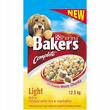 Canned
or pouch foods offer highest palatability and the highest cost per
serving when compared to the dry and soft-moist products. However,
they are less convenient to use, as once opened any unused food
needs to be stored in the refrigerator.
Canned
or pouch foods offer highest palatability and the highest cost per
serving when compared to the dry and soft-moist products. However,
they are less convenient to use, as once opened any unused food
needs to be stored in the refrigerator. Carbohydrates
constitute between 30 percent and 40 percent of dry cat food. Some
have been concerned that this unnatural diet is harmful to cats
and leads to increased incidence of diabetes. Wet cat food, on the
other hand, is high in protein and more similar to a natural carnivore
diet.
Carbohydrates
constitute between 30 percent and 40 percent of dry cat food. Some
have been concerned that this unnatural diet is harmful to cats
and leads to increased incidence of diabetes. Wet cat food, on the
other hand, is high in protein and more similar to a natural carnivore
diet.  Bear
in mind that those 'meaty chunks' in your pet's food may not be
all that they seem! Much of this material is manufactured from ground
up meat which is extruded to give the impression of meat fibres.
Soya protein isolates can help to give these chunks more body by
holding onto water.
Bear
in mind that those 'meaty chunks' in your pet's food may not be
all that they seem! Much of this material is manufactured from ground
up meat which is extruded to give the impression of meat fibres.
Soya protein isolates can help to give these chunks more body by
holding onto water.
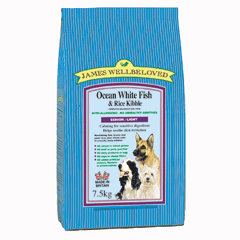



©2008Pet Food Choice - All information on this website is given in good faith, but decisions about the feeding requirements of your pets are entirely up to you, or if necessary should be taken with the help and advice of your veterinary surgeon... Site map - Cookies
